

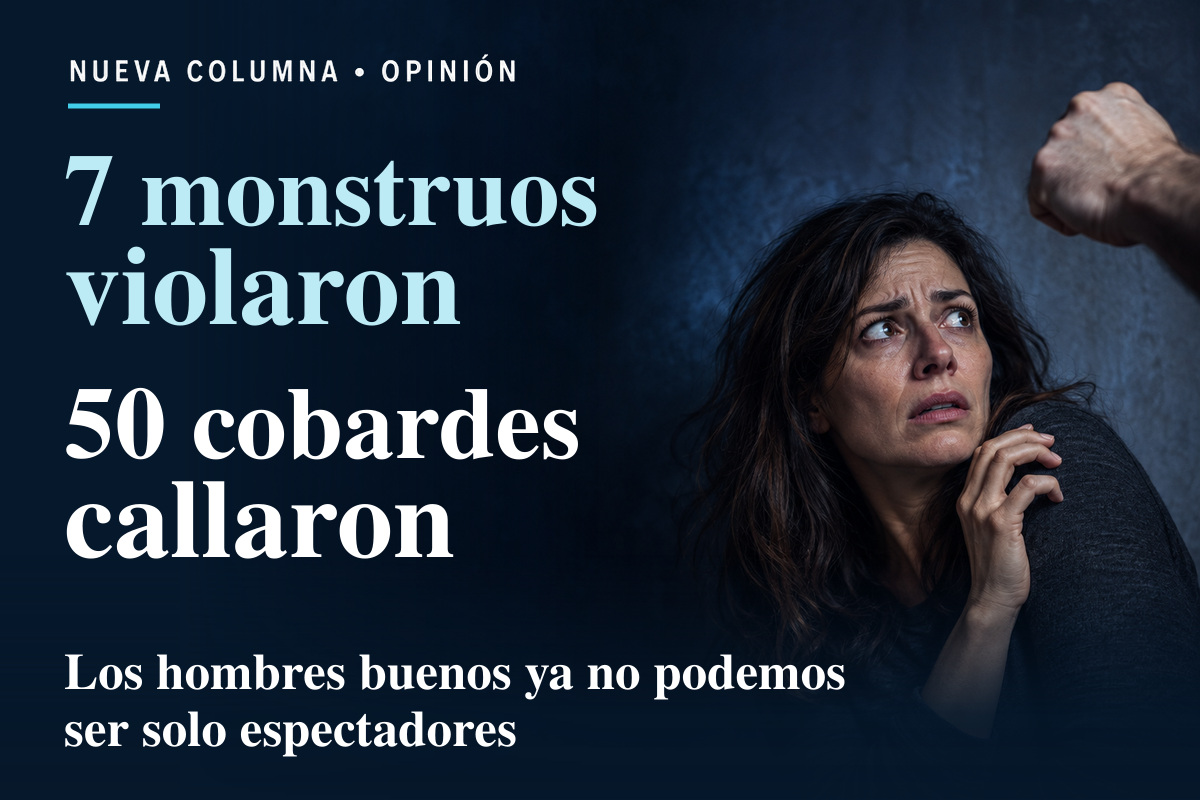
A student at Cornell, one of the world's best universities, reported that seven monsters raped her for around seven hours at a fraternity. Meanwhile, in a chat with more than 50 cowards from that fraternity, people were talking about her. Nobody did anything. But this column is not about Cornell. It is about us, men, and the silence that allows this to keep happening, there and here in Bogotá.
The events, according to her lawsuit: in October 2024, they gave her alcohol, pressured her to inhale ketamine and, once she was unable to consent, assaulted her until 5:45 in the morning. In the Snapchat chat, one of the cowards wrote that her body was “free.” Another asked whether “the store was still open.” They answered yes. In the messages that have become known, nobody asked who she was or whether she was all right. It would have taken just one of them to do so.
The institutions failed her. Campus police summarized her report while omitting, according to her lawyer, the essential point: that she had been raped. Prosecutors did not file charges. And the university imposed half measures: according to the lawsuit, several of the accused were initially allowed to reduce their suspensions by writing an essay. An essay. Expulsions came months later. Now, amid the scandal, a special prosecutor is handling the case, and the accused deny the allegations.
Far away? Not at all. Between January and September 2025, police recorded 5,255 reports of sexual offenses against women in Bogotá. That is about 19 a day. And those are only the women who dare to report it. Between 2020 and 2024, three out of every four victims of sexual offenses in the city were women.
Harassment is even more commonplace. According to the District Oversight Office's survey, 51.6% of women in Bogotá experienced street sexual harassment in the past year, and 95.4% fear experiencing it. Only 8.3% reported it. After the street, TransMilenio buses are where it happens most. Our sisters, daughters and friends plan every journey with fear. We almost never do.
We must acknowledge the good: between January and May 2026, femicides in Bogotá fell by 30%. But femicide risk assessments by the National Institute of Legal Medicine rose by 64%, and 688 women were classified as being at extreme risk. And one figure should keep us awake at night: 72% of femicides from 2020 to 2024 were committed by a partner or former partner. Danger is not always in a dark alley. Sometimes it sleeps in the same house.
Where does all this come from? Not from a few isolated monsters. It comes from how we continue to be raised. As children, we learned that the man is the strong one, the one in charge, the one in control. That a woman is a trophy, an object of desire. That sensitivity is for the weak. This archaic machismo erodes our respect and empathy for women, until some believe they can do whatever they want to a woman.
The Cornell student later wrote that she felt like a “sex doll.” That is where such an upbringing leads: a woman turned into a toy for other people's desires. That is why this cannot be solved through police and prison alone. We must uproot machismo at home, at school and in our friends' group chats. Until we do, we will not progress as a society.
And here comes a phrase that became famous: “Not all men, but always a man.” It is true: most men do not assault anyone. But most remain silent, like the more than 50 in that chat. Silent at the joke in the group chat, at the friend who “went too far drinking with that girl,” at the colleague who harasses women in the office. That silence is not neutral. It is the environment in which the aggressor feels comfortable.
And enough of mocking feminists and calling them exaggerated. The numbers prove their point. We may not agree with every slogan, but the underlying cause—that women should live without fear—should also be ours.
What can we do? Three concrete things. First, break everyday complicity: saying “that's not funny, mate” does more to disarm it than we think. Second, intervene when we see something: approach her, ask whether she is all right, do not leave her alone, alert security or call the 155 helpline. A single question can change everything. Third, raise our sons and nephews differently. Teach them plainly that a woman is not a piece of meat or a sexual object: she is a human being who deserves absolute respect. Always. Teach them that if she cannot say yes, it means no. And that a sensitive man is not a weak man.
Brothers: this is not about apologizing for being men, but about no longer being spectators. No more cowardice, no more silence. It is time to speak openly and courageously, standing beside them. With women and for women.
Addendum: New York Governor Kathy Hochul promised to change her state's law, which currently leaves out cases in which the victim became intoxicated voluntarily. In Colombia, the Criminal Code (Articles 207 and 210) already punishes sexual penetration of a person who is unconscious or has been rendered incapable of resisting. The law already says it. Now it is our turn to say it.
Share column
Views: …
Comments
Join the conversation. Your name and comment will be visible to other readers.