
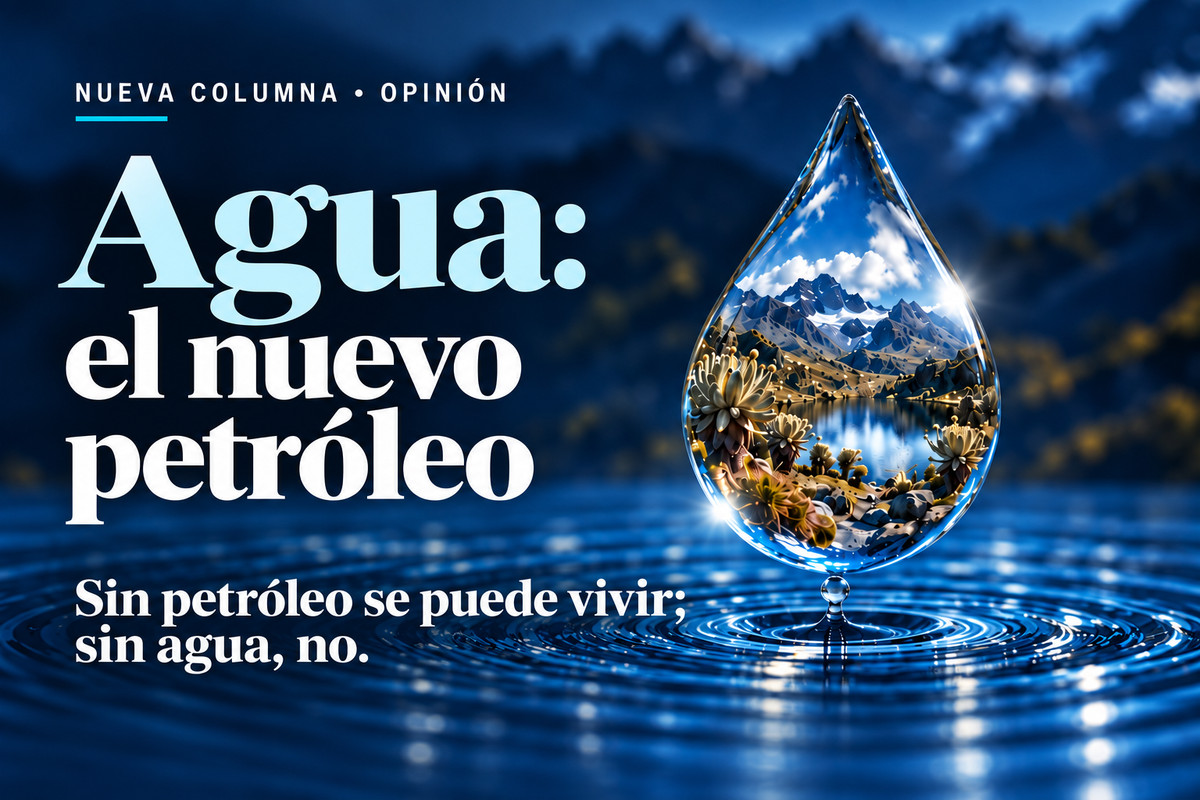
A human being can survive about three weeks without food, but barely three or four days without water. Yet in Colombia we treat it as if it were infinite. Water is the new oil: the resource that will determine which cities and countries survive this century, and which countries will be at war. With one brutal difference: we can live without oil; without water, we cannot. Mother Earth has been sending us warnings for years. And we have ignored them all.
Bogotá experienced them all in the same year. Between April 2024 and April 2025, we lived through water rationing because the Chingaza reservoirs reached historic lows. In the midst of that crisis, in November 2024, a downpour stranded 180 cars and 210 children in school buses on the Autopista Norte, near the Torca wetland. It was no coincidence: that highway was built in 1952, splitting the wetland in two. The water simply returned home.
Drought and flooding in the same city and the same year. How is that possible? Because we destroyed the sponge. At the beginning of the twentieth century, the Bogotá savanna had around 50,000 hectares of wetlands; today, about 727 remain. We wiped out 98% of the natural system that absorbed rain during the wet season and released water during the dry season. And what happened in Bogotá happens throughout the country: rivers turned into sewers, encroached riverbanks, filled-in marshes and threatened páramos.
And now Super El Niño is arriving. This is not social media exaggeration: the government confirmed in June that El Niño had arrived three months early and gives it a 63% probability of being "very strong" between November and January. It could be one of the most intense since 1950. Less rain, more heat, more fires, reservoirs drying up. Almost 60% of the country's electricity capacity depends on water, and XM warns that in the worst-case scenario, reservoirs could fall to 19%, below any historic low. In plain terms: if we run out of water, we run out of electricity. The risk of a blackout is real, and we already know what that means: in 1992, the country endured more than a year of electricity rationing, with homes in darkness and businesses at a standstill.
Amid the thirst, interested parties emerge. As president-elect, De la Espriella announced that he would bring Israeli experts to manage the country's water, and Mekorot, Israel's state water company, has advised regional environmental authorities in Cundinamarca and La Guajira since 2022. Today, concerns are growing about its interest in sources such as the Sumapaz páramo. There is nothing wrong with learning from a country that turned desert into farmland. What would be unacceptable is handing over decisions about our sources through contracts without competitive bidding, community consultation or transparency. We have already seen that story with oil. Technology can be bought; sovereignty over water is not for sale.
There is good news: in August, 314,706 hectares of the Cruz Verde–Sumapaz complex, the world's largest páramo, were formally delimited, with mining and hydrocarbon activities prohibited. This is an initial layer of protection, and it is up to us as citizens to defend it tooth and nail.
But protection is not enough. We must understand the value of water in all its dimensions, because when properly cared for, it is our greatest wealth.
Water is energy. Besides powering our hydroelectric plants, it is the raw material for green hydrogen, produced by splitting water molecules using renewable electricity. Colombia can aspire to become a major exporter of clean energy, provided it has clean, well-managed water.
Water is cities and tourism. Seoul uncovered the Cheonggyecheon stream, buried beneath a highway, and today it is one of the city's most visited places. Madrid put its urban highway underground and gave the Manzanares back to the people. Barranquilla finally turned toward the Magdalena with its Gran Malecón. Imagine the Bogotá, Medellín, Cali or Pamplonita rivers with floodable parks and waterfront promenades: spaces that absorb rising waters during the wet season and fill with life during the dry season. Rivers that stop being sewers and become destinations.
Water is life. Without it, there is no food, no health and no future.
That is why the call is threefold. Safeguard water: untouchable páramos and wetlands, and no handover of our sources to interests that are not accountable to the country. Restore water: renaturalize rivers, give cities permeable ground again, harvest rainwater in every new building and treat our wastewater. And value water: stop wasting it at home, in industry and in agriculture.
Oil brought us royalties, but also wars, spills and dependence. With water, we still have time to do things differently. But the clock is ticking. Let Super El Niño find us prepared, aware and united around the one thing we cannot replace—the water that gives us life—instead of once again looking to the sky and praying for rain.
Addendum: During rationing, Bogotá residents saved more than 46 million cubic metres of water. We proved that we can do it. Let us not wait for the taps or the power to be shut off again before doing it once more: Super El Niño is already here.
Share column
Views: …
Comments
Join the conversation. Your name and comment will be visible to other readers.